Walk into any supermarket in India today and the cooking oil aisle has never been more crowded. Cold-pressed, wood-pressed, expeller-pressed, virgin, refined, blended the labels compete for attention and most of them look similar enough that it’s easy to simply grab the familiar brand and move on. But what’s printed on that label (and what’s quietly left off it) tells you almost everything about what’s going into your food and your family’s body every single day.
This is a practical guide to understanding what cooking oil labels actually mean, what to look for, what to be cautious about, and how VRK Naturals’ four wood cold-pressed oils stack up against each category.
What Cold Pressed Actually Means And What It Doesn’t
The term cold pressed refers to an extraction method where oil is drawn from seeds, nuts, or fruit without the application of external heat or chemical solvents. In a true cold-pressing process, the temperature stays low enough that the oil retains its natural vitamins, antioxidants, fatty acids, and aroma compounds that are partly or fully destroyed when heat or solvents are used.
Wood pressed goes a step further. It refers specifically to the traditional Indian method of pressing seeds using a slow-running wooden pestle the wooden ghani or chekku a technique that has been used in Indian kitchens for generations. Because the wooden press runs slowly and produces very little friction heat, the oil that comes out is as close to its natural state as extraction can get.
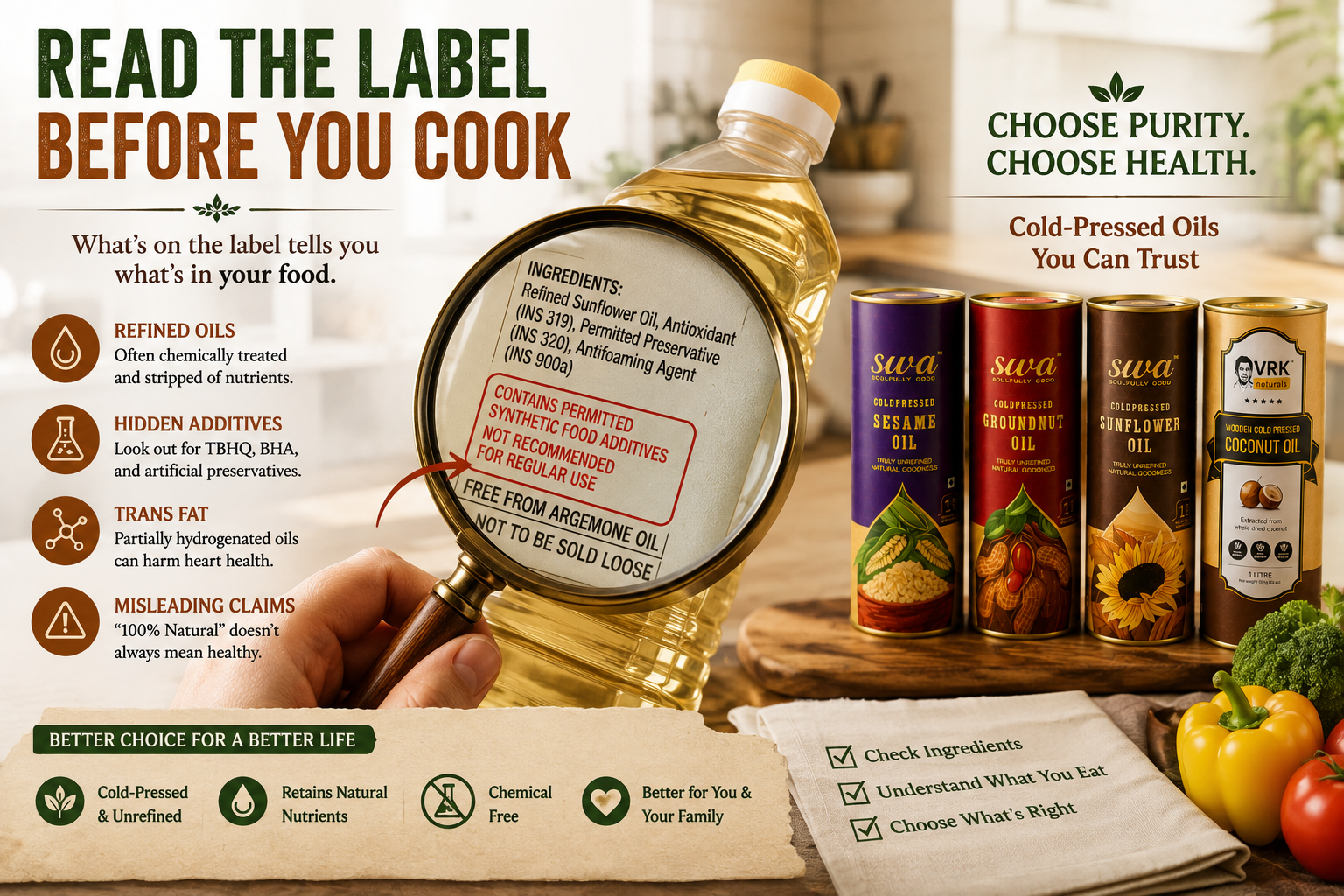
Refined oil, by contrast, goes through multiple industrial stages solvent extraction, bleaching, deodorising, and often hydrogenation designed to produce a neutral-tasting, long-shelf-life product in large volumes. The process works for commercial scale, but it strips out much of what makes the original seed nutritionally interesting.
Here is the honest truth about labels: the word cold pressed on a tin or bottle tells you about the extraction method, but it doesn’t tell you everything. It doesn’t tell you whether the oil was blended with a cheaper base oil after extraction. It doesn’t tell you whether the packaging is right for protecting the oil from light and oxidation. And it doesn’t tell you whether the seeds were premium quality before pressing began.
The Four Things Worth Checking on Any Cooking Oil Label
- The Ingredient List
A pure cold-pressed oil should have exactly one ingredient: the seed it came from. If the ingredient list reads sunflower oil, edible vegetable oil or lists preservatives or artificial colouring, that is a signal that the oil has been blended or chemically treated. One ingredient. Nothing else.
- The Extraction Method
Look for cold pressed, wood pressed, or kachi ghani on the label. If the label says only extracted or processed without specifying how, that gap usually means the answer is industrial refining. Premium brands are specific about their method because it is their genuine point of difference.
- The Packaging
Oil is sensitive to light, heat, and air. Packaging in dark glass bottles or food-grade tin cans protects the oil far better than clear plastic. VRK Naturals packs its oils in tin, precisely because tin blocks light and reduces the oxidation that shortens shelf life and changes the flavour of the oil over time.
- The Smoke Point Disclosure
A trustworthy oil label will either state the smoke point or clearly indicate what the oil is suited for frying, dressings, marinades, and so on. If an oil claims to be suitable for all cooking methods without distinction, that is worth questioning. Not all oils can handle high heat equally, and honest labelling reflects that.
The Four VRK Naturals Oils What the Label Means for Each
VRK Naturals Cold Pressed Sunflower Oil
Extracted from premium sunflower seeds using wood cold-press technology, sunflower oil is a rich source of antioxidants, Vitamin E, and omega-6 fatty acids. It reduces the risk of heart disease since it is high in both poly and monounsaturated fats, contains zero trans fats, and is cholesterol-free.
Its high smoke point makes it suitable for a wide range of cooking methods: frying, baking, sautéing, and salad dressings. It is one of the more versatile options in the range, with a mild flavour that works across Indian, continental, and Asian cooking without overpowering the dish.
When you read the ingredient list on a vrk sunflower oil tin, it says one thing: sunflower oil. No blending, no additives.
VRK Naturals SWA Cold Pressed Sesame Oil
Extracted from the tiny seeds of Sesamum indicum, sesame oil is rich in proteins, Vitamin B, and Vitamin E while retaining essential fatty acids and antioxidants. It is a good source of omega-3 and omega-6 fatty acids, which are essential for heart health and supporting body immunity. It contains MUFA and PUFA, which help lower unhealthy cholesterol levels. It also helps combat stress naturally and nourishes hair, providing strength, shine, and overall hair health when applied topically.
One thing the label is honest about: sesame oil has a low smoking point, which makes it unsuitable for deep frying. Its place is in uncooked sauces, dressings, marinades, and Asian dishes where it is added as a finishing oil. It is also used directly on skin and hair as a traditional topical treatment.
If a sesame oil label claims it is suitable for high-heat frying at a price that seems too good, that is a reason to read more carefully.
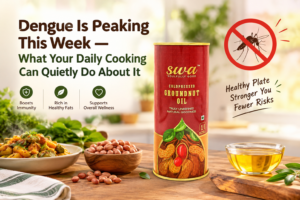
VRK Naturals Cold Pressed Groundnut Oil
Made from premium quality ground nuts using cold press and wood press technology, Vrk groundnut oil preserves the essential fatty acids and antioxidants that are vital for overall health. It is rich in monounsaturated fats, which support heart health, and Vitamin E.
Its high smoke point makes it suitable for stir-frying, deep-frying, seasoning curries, and marinating meats. The naturally nutty aroma adds depth to South Indian and Thai cooking in a way that a flavourless refined oil does not.
If you are deep frying regularly, groundnut oil and sunflower oil are the two from the VRK Naturals range suited for that purpose. Sesame oil is not and the label says so clearly.
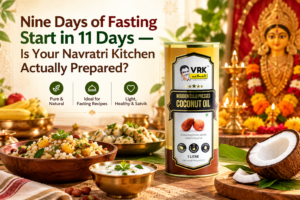
VRK Naturals Cold Pressed Coconut Oil
Made from handpicked, sulphur-free, half-cut dried copra using traditional cold-press methods, VRK Naturals’ coconut oil preserves the natural nutrients and vitamins of the copra without high heat or chemicals. It is abundant in medium-chain triglycerides (MCT), which support metabolism and digestion, and rich in Vitamin E, which supports skin health and relieves mental tension. It is cholesterol-free.
Beyond cooking, it is also used as a beauty oil: regular application nourishes and conditions both hair and skin, promotes growth and strength, and when massaged in regularly, relaxes muscles, detoxifies skin cells, and gives skin a healthy glow.
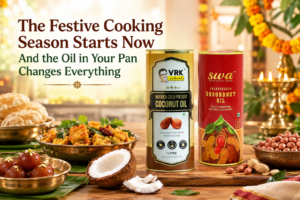
The label distinction here is brand name: coconut oil from VRK Naturals carries the VRK Naturals brand rather than the SWA brand used for the other three oils. It is the only oil in the range marketed for both cooking and skin and hair care.
A Label Reading Habit Worth Building
None of this requires becoming an expert nutritionist before every grocery run. It requires a few seconds and a couple of consistent checks: one ingredient, the extraction method stated, appropriate packaging, and honest smoke point guidance.
The cooking oil category in India is growing quickly, which is a good thing for consumers. But growth also brings products that use the language of healthy oils without fully delivering on the promise. Getting into the habit of reading the label before you cook is a small, practical way to make sure what goes into your pan is actually what the tin claims it to be.