Onam is Kerala’s grandest festival, a ten-day celebration that marks the state’s harvest season and the mythical homecoming of King Mahabali. This year, the festival begins with Atham and builds toward Thiruvonam, the main day, which falls in the last week of August 2026. Homes across Kerala, and Malayali households everywhere else, will spend those ten days cleaning, decorating with pookalam flower carpets, and above all, cooking.
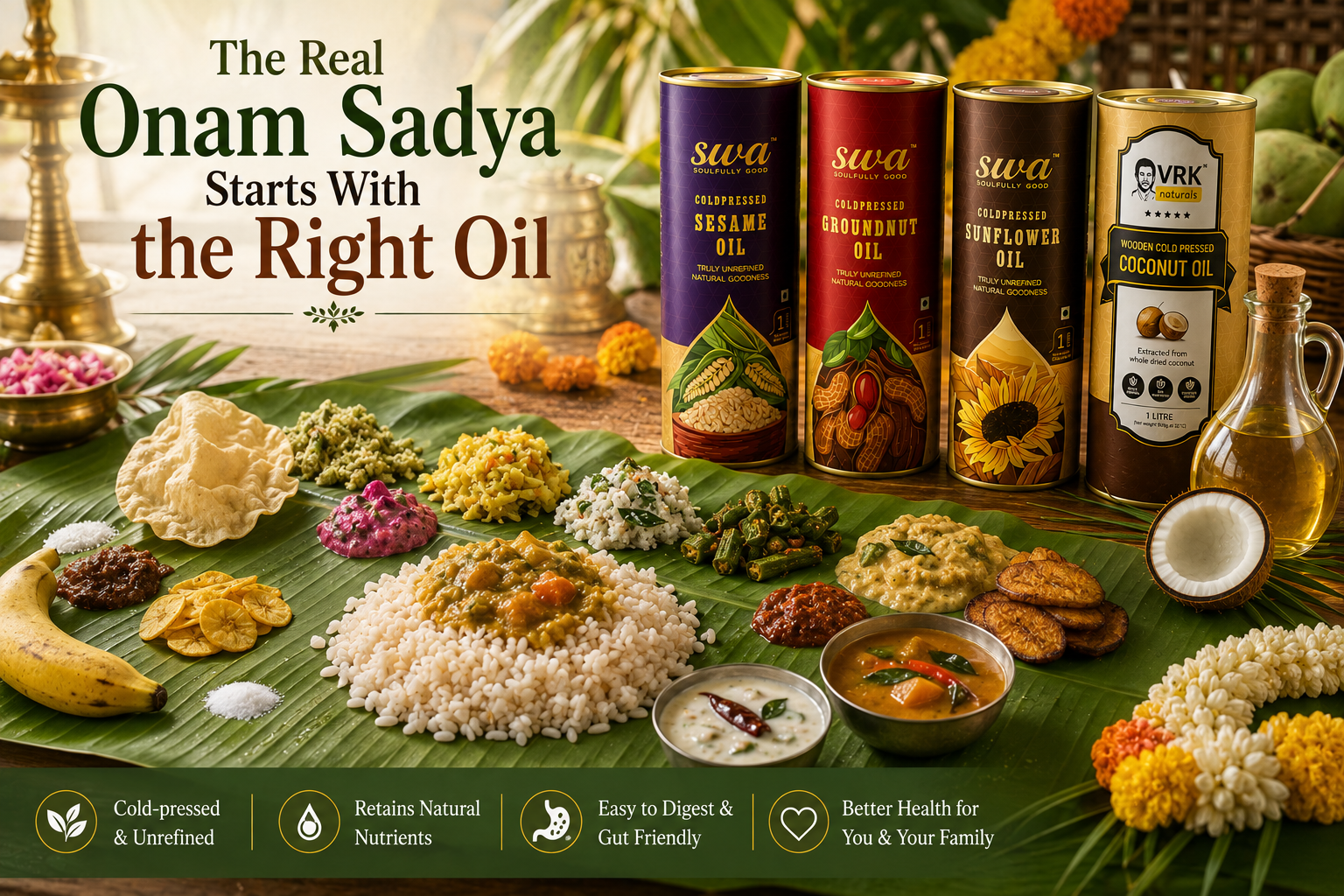
At the center of it all is the Onam Sadya, a traditional vegetarian feast served on a fresh banana leaf, made up of anywhere from a dozen to more than twenty dishes. It’s one of the most elaborate meals in Indian food culture, and every single dish in it depends on the same starting point: the oil in the kitchen.
Most people planning their Sadya menu spend hours thinking about which vegetables to use, how many curries to prepare, and whether the payasam should be made with jaggery or sugar. Very few stop to think about the oil itself, even though it’s the one ingredient that touches almost every dish on the leaf. This year, before the shopping list gets finalized, it’s worth understanding why the oil matters just as much as the recipe.
Coconut Oil: The Soul of a Kerala Kitchen
If there’s one ingredient that defines Kerala cooking, it’s coconut oil. Dishes like avial, a medley of vegetables in a coconut and yogurt gravy, thoran, a dry vegetable stir-fry with grated coconut, and olan, a light ash gourd and coconut milk curry, all rely on coconut oil for their signature aroma. Without it, these dishes simply don’t taste the way they’re meant to.
VRK Naturals’ cold-pressed coconut oil is made from handpicked, sulphur-free, half-cut dried copra. That starting point matters: copra that hasn’t been treated with sulphur, and that’s been carefully selected rather than mass-processed, gives the final oil a cleaner base to work from. The oil itself is extracted using traditional cold-press methods, which avoid the high heat and chemical processing that many commercial oils go through. That distinction is what preserves the oil’s natural nutrients and keeps its flavor intact, which is exactly what a Sadya built on tradition is asking for.
Beyond flavor, coconut oil brings a few genuine nutritional advantages to a festival table that’s often heavy with variety. It’s cholesterol-free, which matters given how many dishes on a Sadya plate are fried or coconut-based. It’s also rich in Vitamin E, an antioxidant that supports skin health, and abundant in medium-chain triglycerides, or MCTs, a type of fat that the body can process and use for energy more readily than other fats, which is useful support during a festival known for long, generous meals eaten over several sittings.
Groundnut Oil: For the Fried Sides
A Sadya isn’t complete without its fried elements. The crisp papadam at the edge of the banana leaf, the fried banana chips that often accompany the meal, and various fritters that show up across the ten days of celebration all need an oil that can handle sustained heat without breaking down or turning bitter.
This is where groundnut oil, also known as peanut oil, earns its place in the festival kitchen. VRK Naturals’ cold-pressed groundnut oil is extracted from premium ground nuts using cold press or wood press technology, without heat or added chemicals in the pressing process itself. The oil that results has a high smoke point, which makes it well suited to frying, and a naturally nutty aroma that’s a familiar note in South Indian cooking traditions.
Nutritionally, groundnut oil brings its own strengths to the table. It’s rich in monounsaturated fats, the kind associated with supporting heart health, and it carries a good amount of Vitamin E, the same antioxidant found in coconut oil, which helps protect the body’s cells from everyday wear. For a festival that involves several days of frying in a row, choosing an oil that holds up well under heat isn’t just about taste, it’s about not compromising on quality meal after meal.
Cooking the Traditional Way, Not the Shortcut Way
What ties coconut oil and groundnut oil together, beyond both being staples of an Onam Sadya, is how they’re made. Both are wood cold-pressed, a slower, more deliberate extraction method that uses a wooden pestle rather than high-speed industrial machinery. This traditional process is designed specifically to retain the vital nutrients, natural flavor, and aroma of the finest quality seeds and copra, rather than stripping them away in pursuit of a longer shelf life or a more “neutral” taste.
It’s worth pausing on why that distinction matters, especially during a festival like Onam. Refined oils, the kind most commonly found on supermarket shelves, are usually processed with heat and often with chemical treatments, aimed at producing a completely uniform, flavorless oil that behaves the same way every time and lasts indefinitely on a shelf. That consistency comes at a cost: much of the natural character of the seed or copra is lost along the way, along with some of the nutrients that a slower, cold-pressed extraction would have preserved.
For a festival meal that’s meant to taste like tradition, an oil that’s been stripped of its natural character works against the very thing you’re trying to achieve. Wood cold-pressed oils, by contrast, keep more of what the seed or copra started with, which is part of why older generations often say a Sadya cooked with the “right” oil simply tastes different, and better, than one made with whatever oil happened to be on sale.
Planning Your Onam Kitchen
If you’re mapping out your Sadya menu ahead of Thiruvonam, it helps to think of your oils the same way you think about your vegetables and spices, as ingredients that deserve some planning rather than a last-minute grab. Coconut oil should be your default for anything that calls for that classic Kerala flavor profile: avial, thoran, olan, and most of the vegetable curries that make up the bulk of the Sadya. Groundnut oil should be your go-to for anything that needs sustained frying: papadams, banana chips, and any fritters or crisp sides you’re planning to include.
Buying both ahead of time also means you won’t be caught short mid-festival, since Onam cooking often stretches across several days rather than happening in a single sitting.
Storage Tip for the Festive Season
With Onam involving days of continuous cooking, how you store your oil matters just as much as which oil you choose. Keep both your coconut oil and groundnut oil in a cool, dark place, away from direct sunlight, which can gradually degrade the oil’s quality over time. Make sure the container is properly sealed after each use, and keep both oils away from heat sources and moisture in the kitchen. Following these basic storage steps will keep your oils fresh and ready to use through the entire ten-day celebration, from the first day of Atham right through to Thiruvonam.
A Festival Worth Getting Right
Onam only comes around once a year, and for many families, the Sadya is the one meal where every dish is expected to taste exactly the way it has for generations. Getting the oil right isn’t a small detail, it’s foundational to getting the whole meal right. Whether you’re making a full twenty-six dish spread or a simpler home version with eight or ten dishes on a banana leaf, starting with wood cold-pressed coconut oil and groundnut oil is one of the simplest ways to make sure your Sadya tastes the way it’s supposed to.