Avakaya is more than just a pickle; it is a culinary tradition passed down through generations. Making the perfect jar of raw mango pickle requires patience, precision, and most importantly, the right choice of oil. In a traditional Indian household, the secret to a long-lasting, flavorful Avakaya lies in the quality of the fats used. Cold-pressed sesame oil is the gold standard for this process. Unlike modern refined oils, VRK Naturals Cold-Pressed Sesame Oil is extracted without high heat, preserving its natural antioxidants and distinct nutty aroma that defines the authentic taste of south Indian pickles.
When you use oil extracted via traditional cold-pressing, it acts as a natural preservative. The high concentration of Vitamin E in sesame oil prevents the mango pieces from spoiling and keeps the spices fresh for months. This is particularly important because the oil creates a protective barrier, sealing the flavors of the mustard powder, chili, and salt into the mango skin. Using a pure, chemical-free oil ensures that your pickle remains healthy and free from the inflammatory residues found in processed alternatives.
Why VRK Naturals Sesame Oil is Essential for Avakaya
The soul of a traditional Avakaya is the oil. Sesame oil, also known as gingelly oil, is preferred for pickling because of its high oxidative stability. This means it doesn’t go rancid easily, even when stored at room temperature for an entire year. VRK Naturals Cold-Pressed Sesame Oil provides the thick, viscous texture needed to coat every piece of mango perfectly.
- Authentic Flavor: Adds a rich, earthy undertone that complements the tanginess of raw mango.
- Natural Preservation: The lignans in cold-pressed sesame oil act as natural antioxidants, keeping the pickle fresh.
- Health Benefits: It is rich in heart-healthy fats and minerals that are preserved during the cold-press extraction.
Choosing the right sesame oil is the difference between a pickle that tastes industrial and one that tastes like home. VRK Naturals ensures that no solvents or additives are used, so the oil you pour over your spices is as pure as the mangoes youve hand-picked for the season.
Preparing the Mangoes: The Foundation of Your Pickle
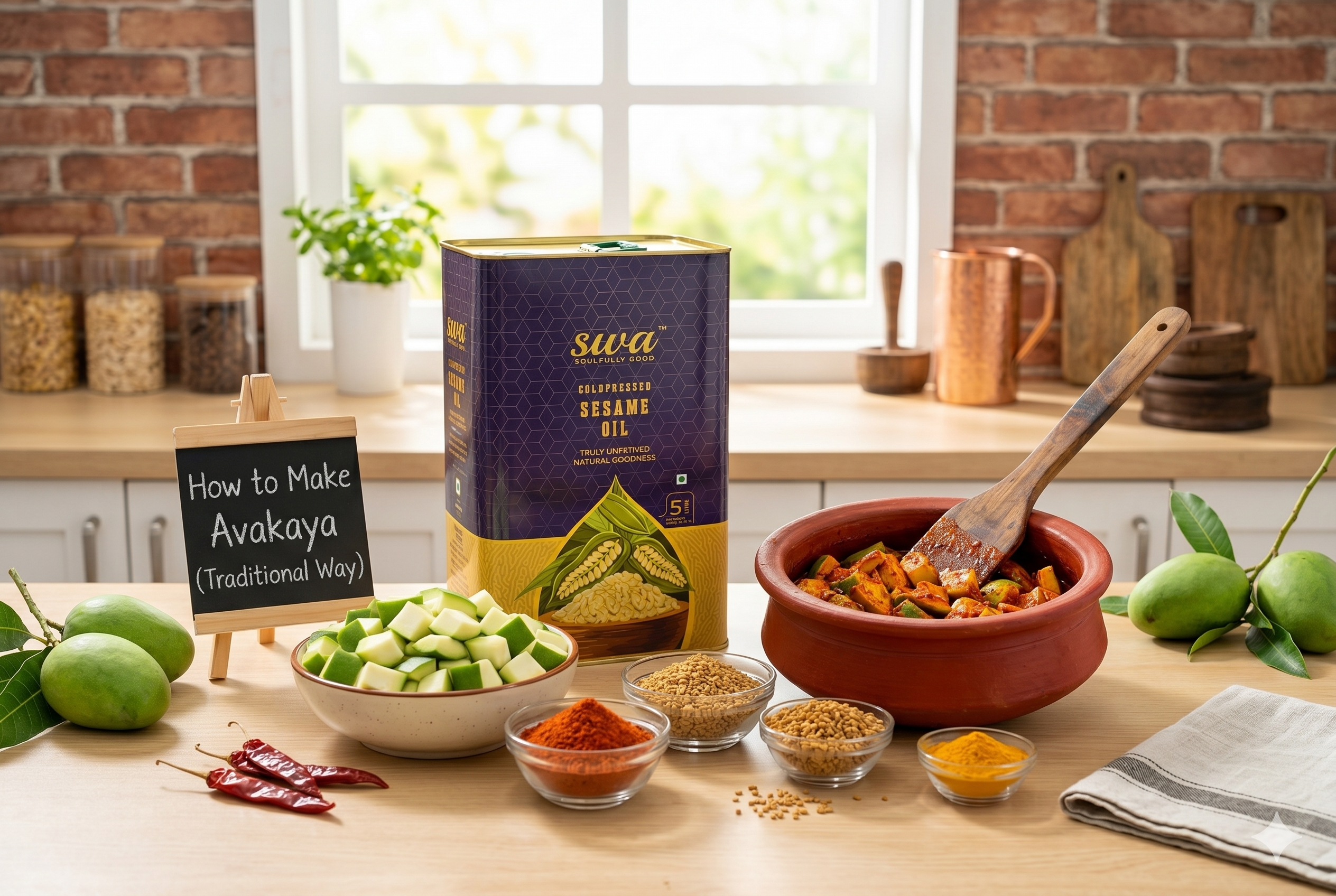
Before the oil is introduced, the preparation of the fruit is critical. For a traditional Avakaya, you need sour and firm raw mangoes. These are usually cleaned, dried thoroughly to remove every trace of moisture, and cut into uniform cubes. Each piece must have a bit of the inner hard shell (the koora) attached, as this helps the mango retain its crunch even after months of soaking in the oil and spice mixture.
Once the mangoes are cut and dried, they are tossed in a blend of spicy red chili powder, salt, and freshly ground mustard powder (ava pindi). The mustard powder provides the characteristic heat and pungency that Avakaya is famous for. At this stage, the ingredients are dry and sharp; it is the addition of VRK Naturals Cold-Pressed Sesame Oil that binds these aggressive flavors into a harmonious, mellowed sauce.
The Art of Curing: Letting the Oil Do the Work
The most vital step in making Avakaya is the curing process. After mixing the mangoes with the spices and a generous amount of VRK Naturals Cold-Pressed Sesame Oil, the mixture is transferred to a ceramic or glass jar (jaadi). The oil should ideally float at least an inch above the mangoes. This oil seal is what prevents fungal growth and allows the mangoes to soften gradually without losing their bite.
- Day 1-3: The mangoes release their juices, which mix with the oil to create a thick, flavorful gravy.
- The Stirring Ritual: On the third day, the pickle is stirred with a dry ladle to ensure the salt and oil are evenly distributed.
- Final Top-up: If the oil has been absorbed, adding an extra layer of VRK Naturals Sesame Oil ensures long-term shelf life.
During these three days, the sesame oil undergoes a transformation. It absorbs the capsaicin from the chilies and the pungency from the mustard, turning into a deep red, aromatic elixir. This cured oil is often eaten with hot rice and ghee even before the mango pieces are fully ready.
Pro-Tips for the Perfect Traditional Avakaya
To ensure your batch of Avakaya stays fresh and delicious until the next mango season, keep these traditional tips in mind:
| Step | Recommendation | Why it Matters |
| Moisture Control | Ensure mangoes and jars are bone-dry. | Even a drop of water can cause the pickle to spoil. |
| Oil Ratio | Use enough oil so that the pickle is fully submerged. | The oil acts as the primary barrier against air and bacteria. |
| Oil Quality | Use only VRK Naturals Cold-Pressed Sesame Oil. | Refined oils lack the preservatives and flavor profile of real sesame. |
| Storage | Store in a cool, dark place in ceramic or glass. | Plastic containers can react with the acidity of the pickle. |
By using VRK Naturals Cold-Pressed Sesame Oil, you aren’t just making a side dish; you are preserving a piece of heritage. The purity of the oil ensures that every spoonful of Avakaya you serve is packed with traditional flavor and the goodness of nature.