Every year, the same thing happens.
The rains arrive. And within two weeks, half the office is down with a cold, someone’s child has a stomach infection, and the neighbourhood WhatsApp group is full of “which doctor to go to” recommendations.
We treat this as bad luck. Or as something the monsoon does to us. But here is the more accurate version: the monsoon does not make you sick. It simply reveals how prepared or unprepared your body already was.
The window between now and the first rains is not just a weather update. It is one of the most important periods of the year to actively build your body’s defences. And cooking oil specifically what kind you cook with every day plays a much larger role in that process than most people realise.
What Actually Happens to Your Body Before the Rains
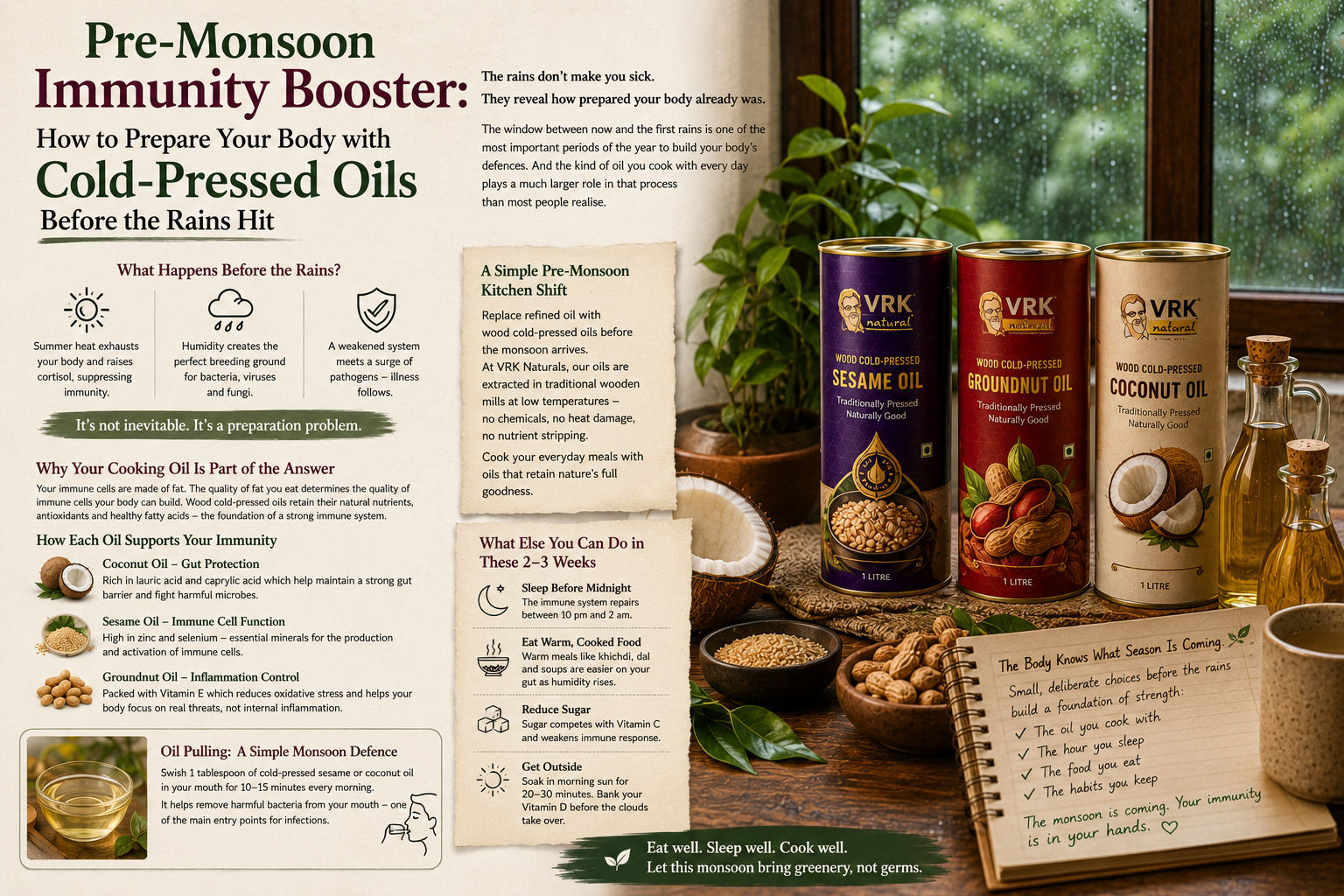
The weeks leading into monsoon are a biological stress point.
After months of summer heat, your body has been working overtime to regulate temperature. That process is exhausting for the immune system. Heat stress increases cortisol levels, which suppresses immune function for up to 48 hours after exposure and after a long Indian summer, that suppression compounds. Your gut lining, which accounts for roughly 70% of your immune activity, takes a hit too. Digestion slows. Inflammation quietly rises.
Then the humidity arrives. Warm, damp air is the ideal breeding environment for bacteria, fungi, and viruses. Your weakened system meets a surge in pathogens and the result is the annual monsoon illness cycle that most people simply accept as inevitable.
It is not inevitable. It is a preparation problem.
Why Your Cooking Oil Is Part of the Answer
This is where most immunity conversations stop short. People talk about vitamin C, tulsi kadha, giloy shots. All useful. But they overlook the one thing that touches every single meal your family eats the cooking oil.
Your immune cells are made of fat. The membranes of every white blood cell, every T-cell, every macrophage that hunts down pathogens all of them are built from fatty acids. When those fatty acids come from refined, chemically processed oils stripped of their natural nutrients, your immune cells are, quite literally, built from inferior raw material.
Wood cold-pressed oils change that equation. Because they are extracted without heat or solvents, they retain the full profile of fatty acids, fat-soluble vitamins, and antioxidants that your body needs to build and maintain a strong immune response. It is not a supplement. It is the foundation.
Here is how each oil contributes specifically to pre-monsoon immunity:
Coconut oil and gut protection. The medium-chain fatty acids in wood-pressed coconut oil particularly lauric acid and caprylic acid have well-documented antimicrobial properties. They help maintain the integrity of the gut lining, which is your first line of defence against the waterborne and foodborne infections that spike every monsoon. A stronger gut wall means fewer pathogens slipping through into the bloodstream.
Sesame oil and immune cell function. Sesame oil is unusually rich in zinc and selenium, two minerals that are directly involved in the production and activation of immune cells. Zinc deficiency surprisingly common in India is one of the fastest ways to weaken your immune response. Cooking regularly with wood-pressed sesame oil, or using it as a finishing drizzle, is a simple way to supplement both minerals through food rather than pills.
Groundnut oil and inflammation control. The Vitamin E content in wood-pressed groundnut oil acts as a powerful antioxidant that reduces oxidative stress the kind that builds up after a long, hot summer. Lower oxidative stress means your immune system is not constantly dealing with internal inflammation, and can redirect its energy toward actual external threats.
The Oil Pulling Connection
There is one more practice worth adding to your pre-monsoon routine and it works directly with cold-pressed sesame or coconut oil.
Oil pulling, the Ayurvedic practice of swishing a tablespoon of oil in your mouth for 10–15 minutes each morning, has been used for centuries as a way to clear oral pathogens. The mouth is one of the primary entry points for monsoon infections. Bacteria that colonise the gums and tongue do not stay there they travel down into the gut, and eventually into the bloodstream.
A consistent oil pulling practice in the weeks before the rains can significantly reduce that bacterial load. It does not require anything more than a tablespoon of good oil and ten minutes before your morning tea.
A Simple Pre-Monsoon Kitchen Shift
You do not need a complicated protocol. The single most impactful change you can make right now is also the most straightforward one.
Replace the refined oil in your kitchen with a wood cold-pressed alternative before the monsoon arrives. At VRK Naturals, the oils are extracted in traditional wooden mills at low temperatures no chemicals, no heat damage, no nutrient stripping so every meal you cook carries the full immune-supporting nutrition that the original seed intended.
Start there. Cook your daily dal, your sabzi, your tadka with oil that has actually retained something worth retaining.
What Else to Do in These Two to Three Weeks
Cooking oil is the foundation, but it works best alongside a few other simple habits. None of these are complicated. Most of them your grandmother already knew.
Sleep before midnight. The immune system does its most significant repair work between 10 pm and 2 am. Consistent late nights before the monsoon means you arrive at the season already depleted.
Eat warm, cooked food over raw. As humidity begins to build, digestive strength naturally weakens. Raw salads and cold foods require more digestive energy than a warm body can comfortably give. Khichdi, rasam, dal, warm soups these are not just comfort food. They are genuinely easier for the gut to process.
Reduce sugar. Not eliminate reduce. Sugar competes directly with Vitamin C for absorption into immune cells, using the same transport mechanism. A high-sugar diet in the weeks before monsoon is one of the most efficient ways to suppress your immune response without realising it.
Get outside before the clouds take over. Vitamin D synthesis drops sharply once the monsoon sets in. The overcast weeks ahead mean reduced sunlight for months. If you can get 20–30 minutes of morning sun in the next few weeks, do it. Consider it banking Vitamin D for the season.
The Body Knows What Season Is Coming
There is an old idea in Ayurveda that the body, if given the right inputs, instinctively knows how to prepare for seasonal transitions. The ancients called it ritucharya: living in rhythm with the seasons.
Modern life has largely disconnected us from that rhythm. We eat the same processed foods year-round, ignore seasonal signals, and then wonder why we fall sick every June.
Reconnecting does not require an overhaul. It starts with small, deliberate choices in the days you still have before the rains. The oil you cook with tonight. The hour you sleep. The glass of warm water in the morning instead of cold.
The monsoon is coming. What condition your immune system is in when it arrives that part is still up to you.